
The broadest vacancy list is rarely the most useful. A focused tax job search combines specialty filters, featured roles, location and work-arrangement criteria, and alerts that keep relevant openings in view.
Titles alone don’t show whether a position matches your specialty, seniority, or preferred working arrangement; role scope and market context matter too. This guide explains how to assess featured vacancies, explore opportunities across countries, evaluate remote listings, and set alerts around your priorities, then use specialty categories to narrow results and build a more focused shortlist.
Key Takeaways
- Assess featured vacancies by specialty, seniority, and role requirements, not title alone.
- Compare international opportunities by market and employer type to focus your search.
- Review remote listings for location, work arrangement, and the scope of the role.
- Set focused job alerts and use specialty categories to keep relevant openings in view.
Featured tax vacancies
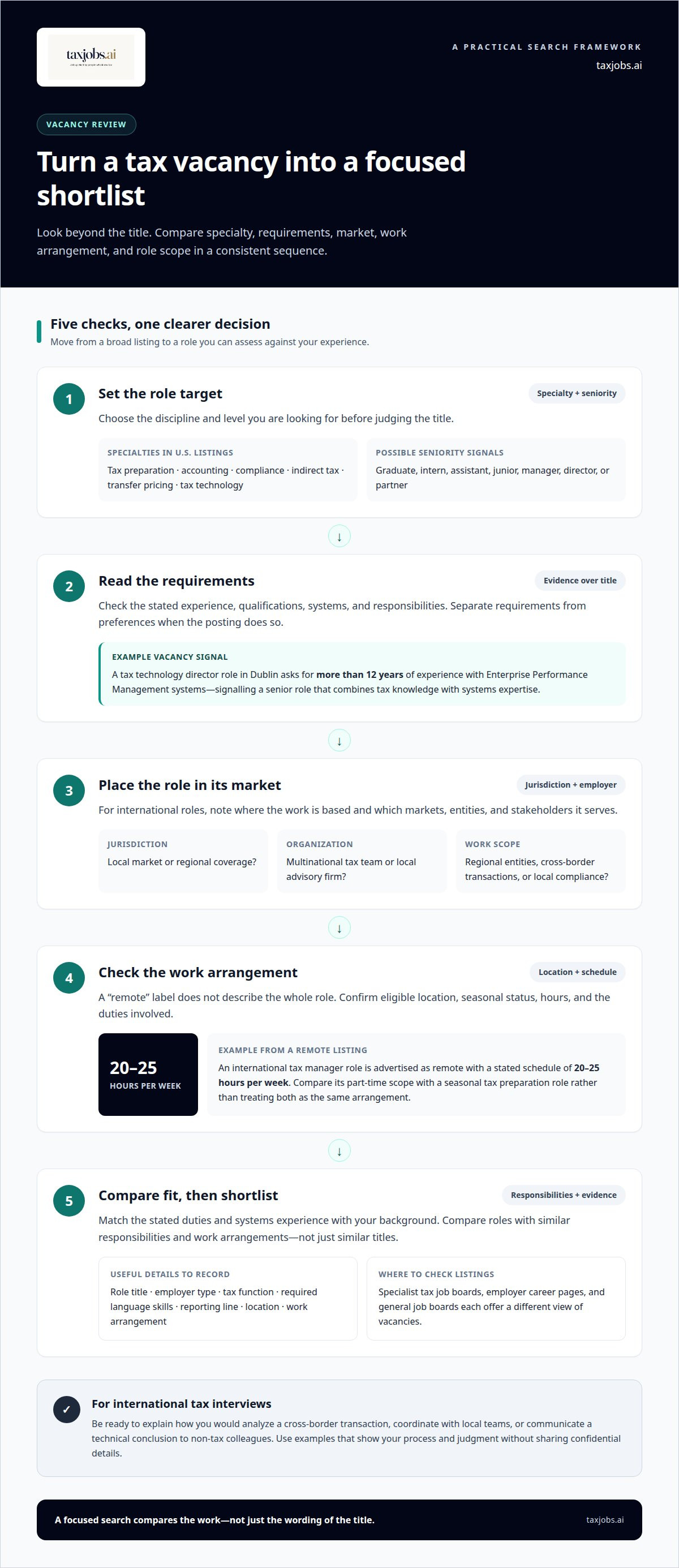
Featured listings help you assess a role’s scope before applying. A tax technology director vacancy in Dublin requires more than 12 years of experience with Enterprise Performance Management systems. That requirement signals a senior position combining tax knowledge with systems expertise. Check the location, seniority, specialty, and required experience before comparing it with your background.
The best websites depend on your target role. Use specialist tax job boards for roles organized by discipline, then review employer career pages for direct vacancy details. General job boards can broaden the search, while a firm’s own listings may clarify team structure and application steps. For a tax job search focused on fit, combine these sources rather than relying on one listing feed.
In the United States, tax vacancies span tax preparation, accounting, compliance, indirect tax, transfer pricing, and tax technology. Senior roles may include manager, director, or partner positions. A VAT/GST specialist role, for example, has a different focus from a tax technology position. Search by specialty and seniority, then check the listed responsibilities and systems experience.
For paid tax-return preparation, IRS-related requirements depend on the work and credential involved. Read each posting for its stated registration, credential, and experience criteria. Distinguish preparation roles from broader tax accounting vacancies, since their duties and employer requirements can differ. The job description is the practical starting point for identifying relevant qualifications.
There is no single salary figure that applies to every U.S. tax preparer or tax accountant role. Compensation depends on location, employer, seniority, specialty, and whether the work is seasonal or year-round. Compare vacancies with similar duties and arrangements. A seasonal preparation position and an in-house tax accounting role are different benchmarks.
To find tax jobs near you, filter listings by city or region and review the stated work arrangement. Local results may include office-based roles, hybrid positions, or remote vacancies tied to a particular location. Jackson Hewitt locations are often operated by independent franchisees, which employ their own staff and handle employment decisions at those locations.
For an entry-level role without prior tax employment, search for graduate, intern, assistant, and junior positions. Highlight relevant coursework, accounting experience, customer service, or tax software exposure. Tailor your resume summary and skills to each vacancy, add concrete examples of relevant work and systems, and keep the layout easy to scan.
International tax job markets
International vacancies reflect each market’s employers and tax functions. Compare roles by jurisdiction, organization type, and reporting scope. A multinational may recruit for a regional tax team, while a local advisory firm may seek staff for domestic client work. These settings can shape daily responsibilities and stakeholder contact.
Read each posting to understand the market it serves. A role based in one country may cover regional entities or cross-border transactions, while another may focus on local compliance and statutory reporting. Note the entities, reporting responsibilities, and team structure to distinguish international work from a role located abroad but focused on one domestic market.
For each target country, record the role title, employer type, tax function, required language skills, and reporting line. Separate requirements from preferences when the posting makes that distinction. A position requiring local-language communication, for example, may involve regular coordination with domestic finance teams. That can matter as much as the technical remit.
International tax interviews often test how you approach unfamiliar facts. You may be asked how you would analyze a cross-border transaction, coordinate with local teams, or explain a technical conclusion to non-tax colleagues. Give examples that show your process, judgment, and communication, without sharing confidential employer or taxpayer details.
Before prioritizing a market, compare the work with your experience. Look for the jurisdictions, entity types, and stakeholders named in the vacancy. A role spanning several countries may require different coordination skills from a domestic reporting position. Rank opportunities by fit, not geography alone.
For a wider view of specialist openings, explore international tax vacancies by their stated market and role focus.
Remote tax jobs
A tax preparer focuses on preparing returns from client or taxpayer records. A tax accountant may handle accounting, compliance, and tax reporting across an organization. A tax analyst typically researches tax issues, supports calculations, or reviews data for a team. Duties vary, so compare the responsibilities rather than relying on the title.
Qualifications depend on the role and employer. Review each posting for education, credentials, registration, software knowledge, and experience requirements. A preparation vacancy may emphasize return preparation and client communication, while an analyst role may prioritize research, data, or accounting experience. Use the job description to identify the qualifications relevant to that position.
Remote seasonal tax roles are available, and some postings specify work schedules. For example, an international tax manager role advertised as remote offers 20-25 hours of work per week.
These examples show why the remote label needs context. Check the stated country or eligible location, seasonal status, hours, and role scope. A part-time international tax manager position differs from a seasonal preparation role. Record those details when comparing vacancies on platforms like taxjobs.ai, then prioritize the arrangement that fits your availability and experience.
Narrow results by combining role and work criteria. Search separately for preparer, accountant, analyst, and tax manager positions. Add “remote” or “seasonal” where relevant, then read the full posting for schedule details. A tax lead role, for example, may include review responsibilities beyond individual return preparation. Match the duties against your experience before applying.
Remote work also affects how you assess team responsibilities. Look for details about client communication, review workflows, software, and collaboration across locations. These give a clearer picture than the remote label alone. Use the stated requirements to focus on roles aligned with your qualifications and preferred schedule.
Tax job alerts
Alerts make vacancy tracking more systematic. Start with a target specialty, such as transfer pricing or tax technology, then add seniority and location criteria. Separate focused alerts from broad searches that may capture unrelated accounting roles. Use different alerts when your priorities differ, such as local compliance and international tax.
Choose search terms that reflect how employers describe roles. A search for “VAT” may miss listings that use “GST” or “indirect tax.” Try separate keyword combinations and compare results. Include both titles and work areas, such as “tax analyst” and “Pillar Two,” but avoid combining so many terms that relevant vacancies are filtered out.
Set location and work-arrangement criteria carefully. For example, create one alert for a preferred location and another for remote roles. Keep seasonal preparation positions separate from year-round accounting vacancies. When an alert arrives, review the employer, responsibilities, seniority, and location before deciding whether the role fits your plans.
Track incoming listings in a simple record. Capture the title, employer, posting date, location, specialty, and application status. A spreadsheet can distinguish new leads from roles you have already reviewed. Note why a promising opening, such as a tax technology manager role, fits your experience.
Refine alerts when results miss the mark. If “tax accountant” returns broad accounting roles, add a specialty or seniority term. If a “remote tax” alert includes unsuitable locations, narrow its location criteria. Review saved terms after each batch of results, keeping useful combinations and removing those that repeatedly surface irrelevant openings.
Use alerts as a discovery tool, not an application queue. Assess each vacancy against your specialty, experience, and work preferences, then compare promising results with current tax vacancies to identify roles worth reviewing more closely.
Taxjobs.ai
taxjobs.ai helps you continue your search with tax-specific vacancies and role categories. Its listings cover specialties such as transfer pricing, VAT/GST, Pillar Two, and tax technology, across employers including the Big 4, law firms, and in-house corporate teams. Roles span graduate internships through partner positions.
Use the Tax Specialty Job Directory to focus on a discipline, or browse Featured Hand-picked Roles for highlighted vacancies. Standard Job Postings offer another way to explore available positions. Together, these features help you narrow a tax job search by specialty or compare openings across employers.
If you’re ready to discuss how taxjobs.ai can support your job search, contact the team.
Set your next search priority
A focused tax job search starts with a clear decision about what you want to change next: specialty, seniority, location, or working arrangement. Choose the factor that matters most and use it to assess each opportunity. That keeps your next steps tied to the work you want, not simply the number of listings you review.
taxjobs.ai organizes tax vacancies by specialty to help professionals find relevant roles. Candidates can explore live listings, including featured positions, and narrow their search with tax-focused categories. Employers can use Standard Job Postings and the Recruiter Dashboard to list vacancies and support recruitment workflows.
Define your priority, select the roles that fit, and take the next step at your pace. Contact taxjobs.ai about your search to discuss the available options. A considered plan can make each application more purposeful and your next career move clearer.